Etiqueta: Group B
Class B. Water in the past.
These are the wonderful productions you have made after interviewing your senior relatives and after watching the “Memòria líquida” docummentary. I am very proud of you and so thankful to the teachers in the ethics class who collaborated! 😆


Nature Is Speaking – Penélope Cruz is Water & Harrison Ford is The Ocean
Watch this video:
Now do the following activities. Watch the video again to check your answers.
- Order the following sentences:
a) I’m something they just take for grantedb) and more and more of them every single dayc) I am waterd) To humans I am simply just theree) But there is only so much of me
- Complete the following sentences:
I start as __________ in the __________ .Flow to the __________ and streams.And __________ up in the __________ .Then the __________ begins __________ .And it will take me __________ years to get back to the __________ I am in __________ .
- Does the narrator think humans will fight over water when there are billions more of humans around? Is that the only option?
- Does nature need humans?
At home you can watch this video on the ocean.
Water in the past
So that you can write about water in the past, here you have some vocabulary memory games to learn new words that might be useful for your writing activity. Enjoy!
Now you are ready to write about “water in the past”.
After viewing the documentary “Memòria líquida” in the ethics class, you were asked to interview your grandparents, great-uncle, great-aunt, senior neighbors or friends about water in the past: drinking water? washing up? laundry? bathroom? water restrictions? water collection from fountains? shower everyday? etc.
You can create a web page with your findings by using Adobe Spark.
Remember to use the Past Simple tense (beware of irregular verbs! 🙄 ) and past time expressions. Start by saying who you interviewed. Remember to add photos of the locations mentioned. Use your own photos or free photos and don’t forget to include photo attribution at the end.
This is my example:

You may need to watch this tutorial on Adobe Spark Pages:
Water everyday: Vocabulary game
Class B Oral presentations on cities in the Globe collaboration
“Meet the Global Scholars” Video: Rubric for peer and self-assessment (classes B&C)
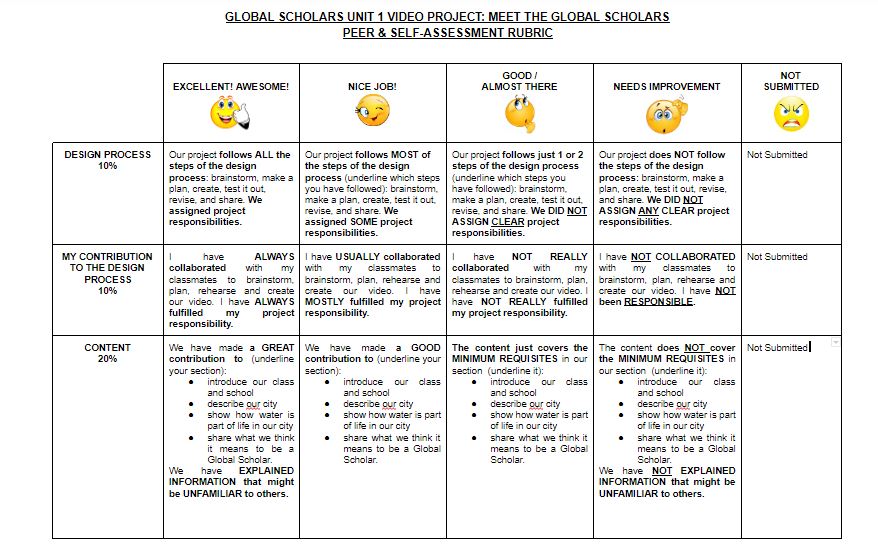
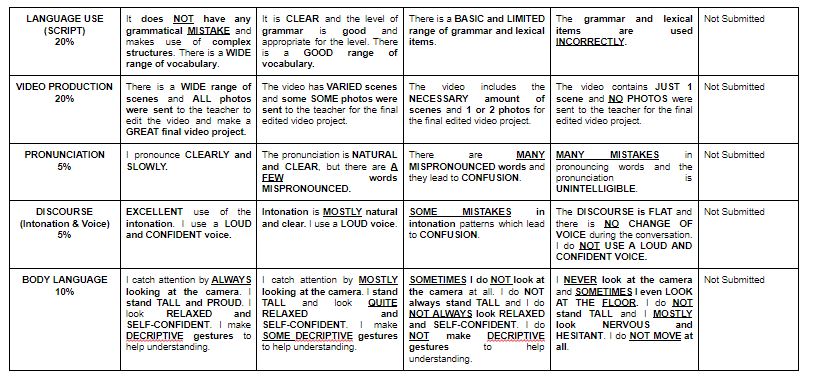
CLASS B “Meet the Global Scholars” video
A presentation on a city in your collaboration

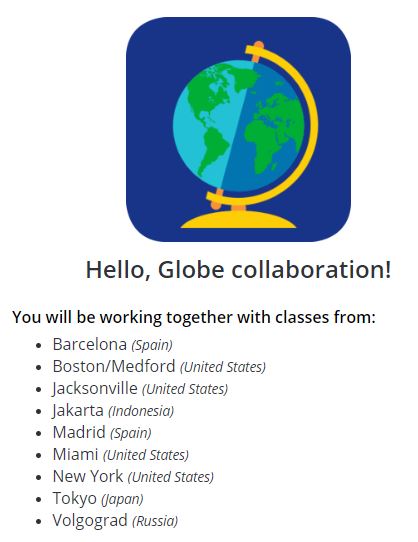
In groups you are going to prepare an oral presentation on a city in your collaboration.
You should include:
- continent
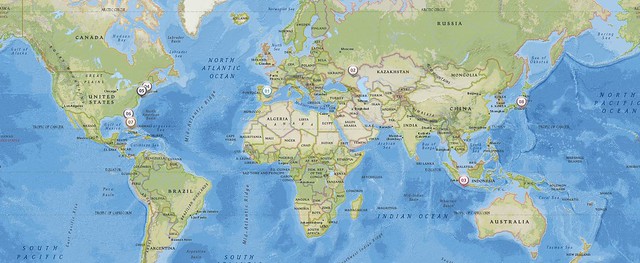
- location on a world map
- location on a country map
- number of population
- is it the capital city of its country? If it is not, which is the capital city?
- if it is a city in the USA, in which state is it? Is it the capital city of the state? If not, which is the capital city of that state?
- nearby lake(s), river(s), sea, ocean, beach…
- main landmarks
- transport (train?, subway?, tram?)
- time zone (compared to our time zone in Barcelona)
Use the following to do your research:
- Britannica Kids
- Simple English Wikipedia
- Our post “Where in the world?”
- Our post “Time zones around the world”
- Kids World Travel Guide
Some reminders on oral presentations:
- Organize the information including all the points above
- Don’t use a lot of words
- Use royalty-free images and attribute them
- Include webgraphy
- Speak clearly and correctly with appropriate volume (practise first, rehearse)
- Don’t read
- Beware of posture and body language