Valoració del projecte

Reflexió final sobre el projecte realitzat aquest curs 2017-18 sobre tecnologia digital a l’aula

He tingut l’oportunat d’introduir  l’ús de recursos digitals al laboratori de l’institut amb els alumnes de Secundària i posar a prova algunes de les tasques que he anat incloent en el meu bloc de la XTEC i que m’ha servit com a dossier i EPA.  

La primera impressió és positiva: els alumnes demostren molt interès pel que fa a activitats pràctiques en grup,el treball cooperatiu, l´ús de noves tecnologies i la possibilitat de compartir amb els seus companys el que van aprenent en les diferents situacions en què es troben. He trobat com els alumnes aporten solucions imaginatives i al marge de l’estratègia convencional als problemes que van encarant al llarg de la realització de les pràctiques i arriben a acords per treballar de manera més efectiva, la qual cosa els motiva fortament i fa que es comprometin amb l’aprenentatge, ja que es propicien situacions d’aprenentatge molt més properes a la realitat que coneixen i a la qual estan acostumats des de petits.

 Aquest projecte ha permès posar-me al dia pel que fa als recursos digitals a l’aula i millorar la meva competència digital docent. Crec que cal insistir en optimitzar l’accés dels alumnes i els docents a eines i tecnologies digitals, els resultats que se n’obtenen són motivadors i satisfactoris per tothom.

pràctiques laboratori digital

Video al laboratori

Curtmetratge d’uns 2 minuts de durada on es mostra el laboratori i la feina que hi fem

En aquest article hi trobareu l’enllaç al meu canal de Youtube on hi ha el video realitzat. Es tracta d’un petit curtmetrage on podeu veure-hi el nostre laboratori de Química i com els alumnes hi fan pràctiques.
Els alumnes, al seu voltant, fan també videos on es mostra la feina que fan al laboratori. Per això els cal ajuntar, editar i fer el muntage final del video sumant tots els videos que s’hagin elaborat. Posteriorment es penjen al YouTube i es comparteixen amb la resta de companys.
L’enllaç del video que he fet és el següent:
Enllaç a Youtube
Aquí teniu el video incrustat:
[youtube][/youtube]


Aplicació de vídeo VivaVideo

L’aplicació de vídeo VivaVideo és un editor de vídeo amb múltiples efectes i recursos per crear composicions audiovisuals

L’aplicació VivaVideo és un editor de vídeo amb múltiples efectes i recursos per crear composicions audiovisuals. Els videos es poden exportar i compartir directament a xarxes socials.
Es pot fer servir en qualsevol nivell educatiu: des d’educació primària, educació secundària obligatòria, Batxillerat, Cicles formatius de formació professional a ensenyaments artístics o ensenyaments esportius, ensenyaments d’idiomes i educació d’adults.
És una App perfecta per editar vídeo, permet retallar, aplicar filtres, inserir imatges, dibuixos , música, àudio i text. Aquesta aplicació també permet fer collage tipus postal o pòster i presentacions de fotografies. No té tutorial per això al principi cal practicar. És molt fàcil de compartir a les xarxes socials. Motiva fàcilment als alumnes i és útil per diferents matèries.
Entre els seus punts forts es pot destacar:
1. Bon recurs per crear vídeo
2. Permet compartir a les xarxes o guardar a la seva galeria
3. El resultat és força bo
Pel que fa als seus punts febles:
1. No tot és gratuït
2. Menú d’ajuda inexistent
3. Triga bastant en exportar el vídeo a la seva galeria

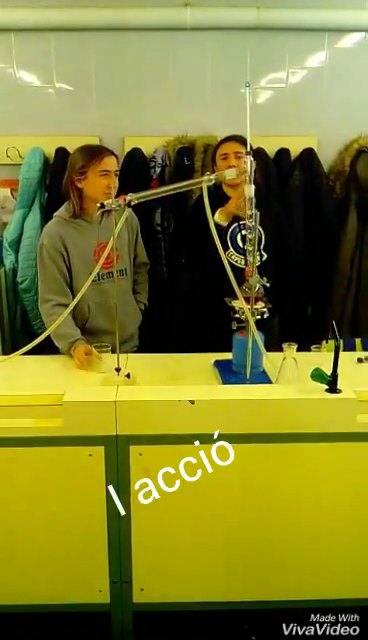
Jo l’estic utilitzant per fer i editar un video sobre el laboratori de Química, amb la inclusió de text i audio.
En mostro una imatge:

Proposta didàctica: Tecnologia al laboratori

Aplicar els coneixements adquirits en l’ús de la tecnologia digital per fer un bloc on incloure una pràctica feta al laboratori.

Moltes vegades ens trobem que els alumnes fugen de les explicacions magistrals, ja sigui a l’aula o al laboratori de ciències. Troben desencoratjador enfrontar-se individualment i amb poc suport de companys i professor a algunes tasques més complicades . Sovint es queixen que no participen prou en la discussió dels resultats que s’obtenen d’una pràctica al laboratori o no saben si estan fent de la manera adequada la feina demanada.

En canvi, els alumnes mostren un interès molt viu en activitats pràctiques, el treball cooperatiu i l’ús de les noves tecnologies, especialment en la possibilitat de compartir el seu treball i idees amb la resta de companys.

És per això que la meva proposta didàctica té com a punt de partida l’aplicació dels coneixements que els alumnes ja tenen o dels que poden aprendre fàcilment a traves de l’ús de la tecnologia digital. Aquesta pot ser una eina motivadora per a ells, ja que els permet integrar els continguts de la pràctica i, treballant en equip, compartir-ho amb la resta de companys.

En aqueta proposta didàctica es tracta de que els alumnes triin una de les pràctiques fetes al laboratori i compartir-la  amb d’altres grups que han fet la mateixa pràctica en un bloc on integrin tot el que han fet en la pràctica, des dels objectius de la pràctica, la metodologia de treball, els resultats i la conclusió a la que han arribat. En aquest bloc els alumnes poden afegir articles amb discussions sobre les dificultats trobades, compartir experiències, així com  enllaços a pàgines on es treballin els aspectes teòrics tractats en la pràctica i permetre els comentaris d’altres companys sobre la feina realitzada.


Cassini finds final ingredient for alien life in Enceladus’s sea | New Scientist

The Cassini spacecraft has found molecular hydrogen spurting in the watery plumes from Saturn’s icy moon Enceladus, an energy source for anything that might live there


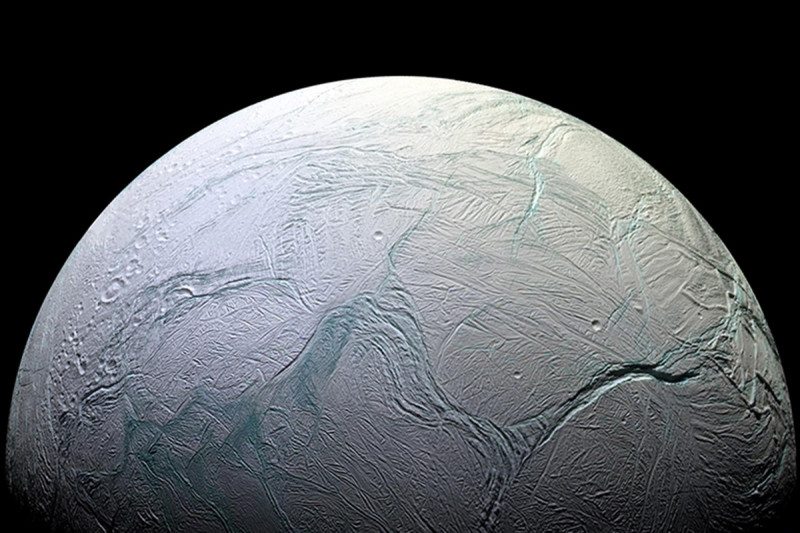
Enceladus is ripe for life. In one final pass through the icy moon’s liquid plumes, NASA’s Cassini spacecraft found molecular hydrogen, which indicates favourable conditions for life in Enceladus’s subsurface sea.

For over a decade, Cassini has been exploring Saturn and its moons, sending back the best pictures and measurements we’ve ever had of the system. It dropped off the Huygens probe at hazy Titan, scrutinised the structure of Saturn’s rings, and revealed that Enceladus was much stranger than anyone expected.

Enceladus’s south pole has strange, warm fractures, and plumes of liquid water coming from an internal ocean many believed was impossible in such a small, cold world. The plumes also contain enticing compounds like organics and carbon dioxide, all necessary for life as we know it on Earth.

Those things represent tantalising hints of habitability. But there was no evidence for an energy source to feed potential life, until now. In extreme environments on Earth, hydrogen can play that role.

“What was missing to complete the story of habitability was an energy source,” says Chris McKay at NASA’s Ames Research Center in California. “This completes that story.”

Candy for microbes

Cassini did detect hydrogen in early trips through the plumes, but there was no way to determine if it came from the moon itself or from inside the instrument. When particles from the plumes entered the spacecraft’s Ion and Neutral Mass Spectrometer (INMS), they interacted with its titanium walls, producing the same sort of hydrogen as hydrothermal processes would produce under Enceladus’s ocean.

“We didn’t know we were going to do this experiment when we launched Cassini,” says Hunter Waite at the Southwest Research Institute (SwRI) in Texas. So to look for hydrogen, Waite and his team had to put the INMS instrument in a new mode that measured the molecules without allowing them to touch the walls.

Finally, they found the molecular hydrogen they were looking for – and a lot of it. Their findings indicated that there was too much hydrogen to be stored in tiny Enceladus’s ice shell or ocean. That means it must be continuously produced there, probably by hydrothermal reactions similar to those that occur near hot vents at the bottom of Earth’s oceans.

Near those vents on Earth, there is life. Some of Earth’s oldest microorganisms, called methanogens, are often found near hydrothermal vents where, deprived of light and oxygen, they convert hydrogen and carbon dioxide to methane.

“If you were to take methanogens from Earth’s ocean and transport them to Enceladus, they would have all the food they need,” says Waite. “This is like candy for microbes.” If Earth microbes could exist on Enceladus, maybe it could have homegrown life, too.

Between its liquid water, organic molecules, and hydrogen, Enceladus is looking more and more like our best bet for finding extraterrestrial life. “If we’re looking for life in the solar system, then Enceladus has a lot of potential to be the place that we could find it,” says Kelly Miller at SwRI, who was part of the team that discovered Enceladus’ molecular hydrogen.

Signs of life?

Showing Enceladus is habitable is one thing, finding life is quite another.

“Just because a place is suitable for life doesn’t mean that life is present, because we don’t understand the origin of life at all,” McKay says.

Some believe that life is inevitable, given the right conditions. Others think that it is rare and requires a great deal of luck. Right now, our sample of definitely habitable worlds has only one: Earth. But pairing observations of Enceladus with our own planet could help astrobiologists figure out the likelihood of life existing elsewhere in the universe.

“The message is in the molecules,” says Christopher Glein, another member of Waite’s group at SwRI. “We just have to keep measuring the molecules in that plume, and that’s going to tell us about what we cannot see.”

We won’t have any more molecules from Enceladus’s plumes for a long time, though. Cassini is running low on fuel, and if it were to crash into Enceladus it might destroy any extraterrestrial ecosystem living there. To protect potential life on Saturn’s ocean moons, we have to destroy the only tool we have to find it. The spacecraft will crash into Saturn on 15 September.

Even if an Enceladus mission is selected in NASA’s next round of New Frontiers funding, to be announced in 2019, it wouldn’t reach the Saturn system until the late 2020s or early 2030s.

“To address whether there is life, we’ll have to go back,” McKay says. “Two decades can go by pretty fast.”
Origen: Cassini finds final ingredient for alien life in Enceladus’s sea | New Scientist