It’s your turn!

In this section the students have to take part and look for some information about any different aspect related to Irish music:

1. Be a reporter

Students have to find some news related to an Irish event; for example: an Irish traditional music gig, an Irish dance exhibition, a music festival. They have to address us to it by using a blog, including pictures, videos, etc, if possible.
Add coments and critics, as if they were real reporters working for either a culture magazine or newspaper.
(the level of the students could go from 4th ESO, to Batxillerat, and also 3rd, 4th and 5th levl in EOIs).

2. Irish Vocabulary and expressions

http://www.ehow.com/how-to_4845399_3_speak-english-irish-accent.html

Using this link students can have a better idea about how different English spoken in Ireland can be.
The can read it out, understand, command the pronunciation and the right use and then create a brief dialogue where they have to include some of the expressions presented here.

Students may be able to get some ideas by watching or/and visiting one of the most hilarious Irish TV comedies “Father Ted” in youtube.

If you want to know more about the main character Dermot Morgan (a great Irish actor) who died pretty soon after becoming famous, here is the link.

http://en.wikipedia.org/wiki/Dermot_Morgan

Just to conclude with this blog, I’d like to suggest you to enjoy the Irish fantastic sense of humour by watching this brilliant film called “Waking Ned”.
Here is the link: http://www.imdb.com/title/tt0166396/

And here is the trailer from youtube:

And remember to have a good listen to the last scene in the pub…then you’ll know what I’ve been talking about in this blog.
Hope you enjoy it!
Slàinte!
Irish Dancing

Irish dance is a group of traditional dance forms originating in Ireland which can broadly be divided into social dance and performance dances. Irish social dances can be divided further into céilí and set dancing. Irish céilí dances are danced by formations (ceili) of couples of 2 to 16 people. Irish social dance is a living tradition, and variations in particular dances are found across the Irish dance community; in some places, dances are deliberately modified and new dances are choreographed.

You can see a photo of Typical irish dancers here.

http://www.socalirishdance.com/Irishstepdance.php

Irish Traditional Music

Traditional music:
In the seventeenth century harp musicians were patronised by the aristocracy in Ireland. This died out in the eighteenth century. Turlough Carolan (1670 – 1738) was the most famous,[1][2] and over 200 of his compositions are known. He wrote in a baroque style that is usually classified as classical music, but is played by many folk musicians today. Edward Bunting collected some of the last-known harp tunes at the Belfast Harp Festival in 1792. Other important collectors include Francis O’Neill[3] and George Petrie.

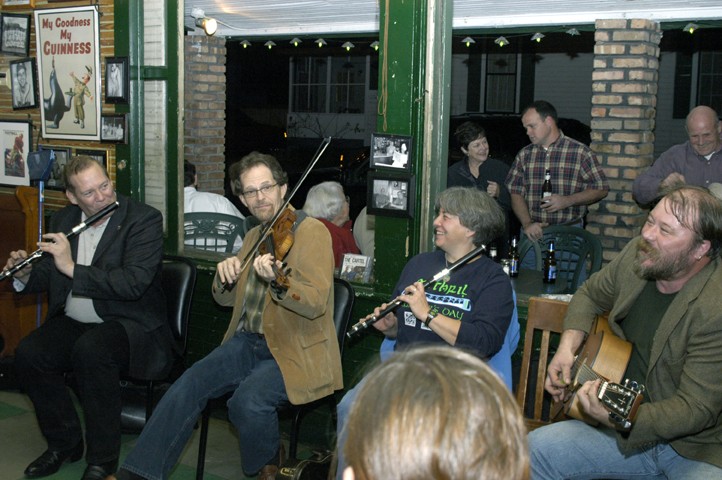
Irish dance music at weddings and saint’s days would have included reels (4/4), hornpipes and jigs (the common double jig is in 6/8 time).[4] The polka arrived at the start of the nineteenth century, spread by itinerant dancing masters and mercenary soldiers, returning from Europe.[5] Set dancing may have arrived in the eighteenth century.[6] Later imported dance-signatures include the mazurka and the highlands (a sort of Irished version of the Scottish strathspey).[7] In the nineteenth century folk instruments would have included the flute the fiddle and the uilleann pipes.

By the start of the twentieth century the button accordion and the concertina were becoming common.[8] Irish stepdance was performed at céilís, organised competitions and at some country houses where local and itinerant musicians were welcome. [9] Irish dancing was supported by the educational system and patriotic organisations. An older style of singing called sean-nós (“in the old style”), which is a form of traditional Irish singing was still found, mainly for very poetic songs in the Irish language.[10] From 1820 to 1920 over 4,400,000 Irish emigrated to the USA, creating a Celtic diaspora in Chicago (see Francis O’Neill), Boston, New York and other cities.[11] Irish musicians who were successful in the USA made recordings which found their way around the world and re-invigorated musical styles back in the homeland. [12] An example is Ann Moray, who included traditional Irish music in her concerts, and issued a recording titled Gaelic Songs and Legends as well as a recording of Love Songs of Robert Burns.[13]

The 1960s saw the emergence of The Dubliners and The Chieftains.

Enjoy one of the most famous Irish song”Whiskey in the jar” sang by The Dubliners.

Now, take a look at this other video. Another very famous Irish band during the 70’s, Thin Lizzy is performing the same old song “Whiskey in the jar”. Hope you enjoy it!

Bodhran

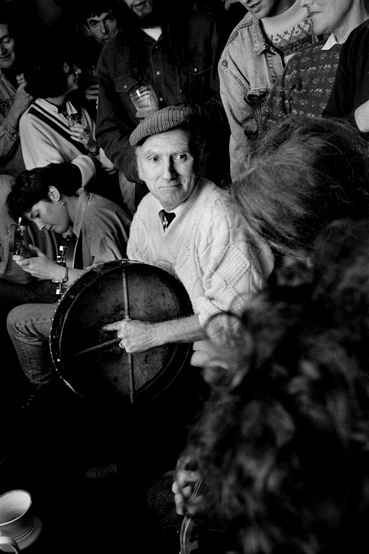
bodhranOne of Ireland’s oldest products is the Bodhran (Irish Drum), pronounced ‘Bow-Rawn’ meaning deaf or haunting. It probably originated as a skin tray used on bogs cutting turf (peat). Guaranteed genuine Goatskin and native Irish Beech, the skin is also glued on. Most of the traditional musicians worldwide use our Bodhran which is hand-crafted with care in Connemara.

Flute

flute_12

Flutes of one sort or another have been played in the celtic countries for over a thousand years. The kind in use today is mainly the ‘simple-system’ flute with six holes and up to eight keys. This became popular in Ireland during the nineteenth century, when classical musicians were abandoning them for the new Boehm-system flute. Modern traditional flutes are usually copies of these early instruments, and almost always made of wood. Their cylindrical bore and wooden construction give a hollow, airy tone, softer than the classical flutes and much smoother than the tin whistle.