When fall arrives and the days are shorter, deciduous trees decrease chlorophyll pigment production allowing other pigments present in the leaf to become apparent, resulting in non-green colored foliage. These other pigments include carotenoids that are yellow, brown, and orange. Anthocyanin pigments produce reds and purple colors, though they are not always present in the leaves.
The beginning of leaf drop starts when an abscission layer is formed between the leaf petiole and the stem. This layer is formed in the spring during active new growth of the leaf, it consists of layers of cells that can separate from each other.
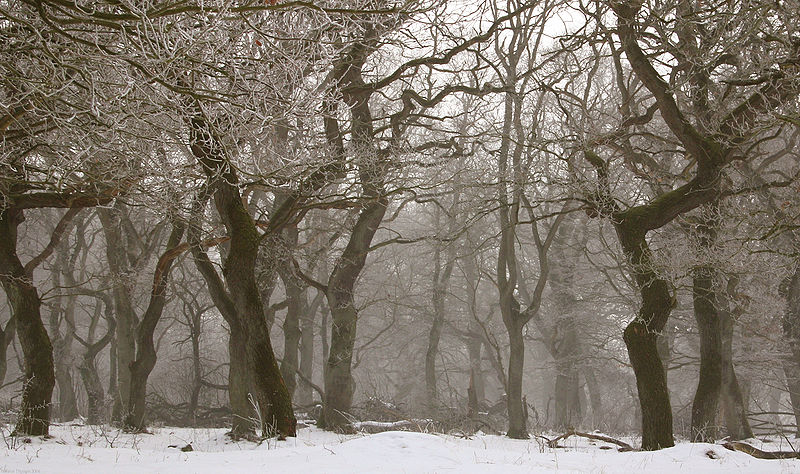
Example of deciduous tree: Oak (Quercus faginea)
Example of deciduous tree: Hazel (Corylus avellana)
Example of deciduous tree: Cherry (Prunus avium)
Example of deciduous tree: Chestnut (Castanea sativa)
Example of deciduous tree: Poplar (Populus nigra)