Here you can watch a video I have designed to show you the learning process we have done during these days… It has been such a good experience! Thank you very much!!!!

Matter in the Kitchen is the CLIL unit I have designed as the final product of the course Uso de Recursos Educativos Abiertos para el aprendizaje integrado de contenidos en lenguas extranjeras (AICLE). As I have explained in a previous article, this unit is part of a project called Our Restaurant.
This unit will be run in 1st ESO students. It is located in science subject.
I expect that all the content will be taught with the project based learning methodology. So the students will be the main protagonists of their learning process. Their challenge is to experiment in the kitchen as it is like a lab and to prepare a delicious dish for an open day with their families and for Mr. François Papillon, a famous french gourmet. Meanwhile they will need to be experts themselves in many things related with the content of matter, mass, weight, volume, density, mixtures, acids and bases, preserving food methods…

The project Our Restaurant will last about 50 hours, distributed in five units:
I have developed Matter in the Kitchen as follows:
– Worksheet nº 1: See what’s up! The kitchen and the lab. 3h
– Worksheet nº 2: Matter, mass, weight, volume and density 6h
– Worksheet nº 3: Experiment: Lemons do they sink or float? 2h
– Worksheet nº 4: Test yourself 0,5h
– Worksheet nº 5: Go for it! 2h
– Worksheet nº 6: Revision 0,5h
Some of the activities I have planned are:
Use drawings to label specific vocabulary

matching activities

filling gaps in simple sentences

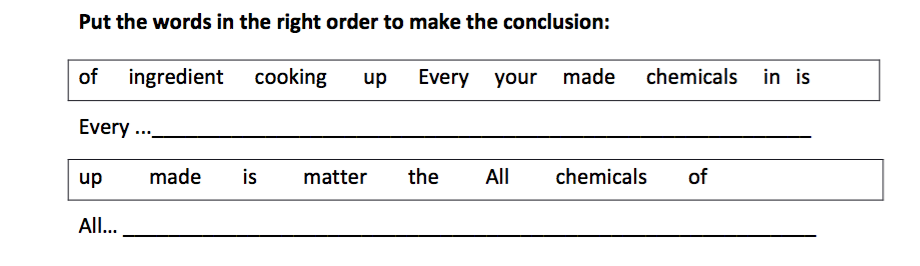
put words in order to make sentences
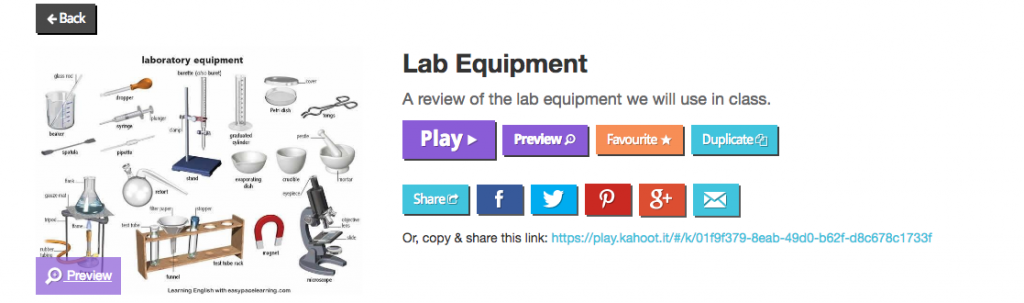
kahoot

crossword to improve the specific vocabulary

comics

searching information in videos, presentations and texts,

experiments…

and finally a self evaluation.

Some of the resources and materials used in this unit are: The portfolio and the moodle Platform but also:
Textual+visual resources:
Visual+aural resources:
Measuring Regular and Irregular Solids
Mass and Weight on the Moon and Other Planets
Manipulative+interactive resources:
Sugar Density Layers experiment
Gamification resources:
And of course, some important scaffolding…

another example…

The evaluation criteria in this unit will be:
Students should be able to:
The evaluation instruments will be a continuous assessment of each student with different resources such as: quizzes, class portfolio, rubrics, bands… Students will have a self assessment in the middle of the unit so that they will be able to improve some aspects and also at the end of the project when they will have to reflect on their individual work and the final product.
So, in the end, I hope students will really enjoy and learn by doing in Matter in the Kitchen. 🙂
