Here are some explanations for grammar. If you want more information, activities or improve your English skills, have a look at the interesting websites.
A continuació es presenten algunes explicacions sobre gramàtica. Si voleu més informació, activitats o millorar les vostres habilitats en anglès, mireu la secció dels recursos web.
THERE IS / THERE ARE (Hi ha)

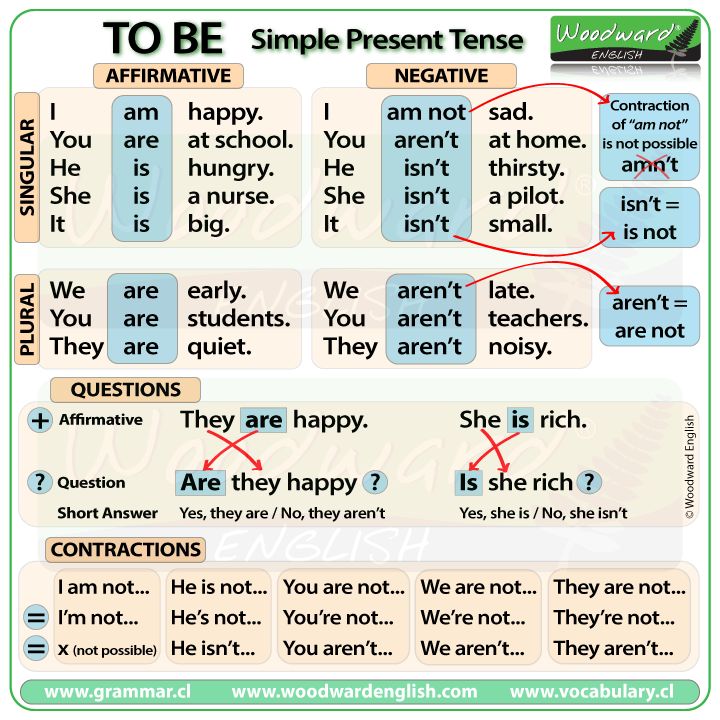
VERB TO BE ( Video with examples)


PRESENT SIMPLE
- Things which are always true. E.g. Water boils at 100 degrees.
- Habits or things we do regularly: E.g. I drink coffee every morning.
Coses que són sempre veritat. Ex: L’aigua bull a 100 graus. Hàbits or coses que fem regularment. Ex: Prenc cafè cada matí.
 PRESENT CONTINUOUS
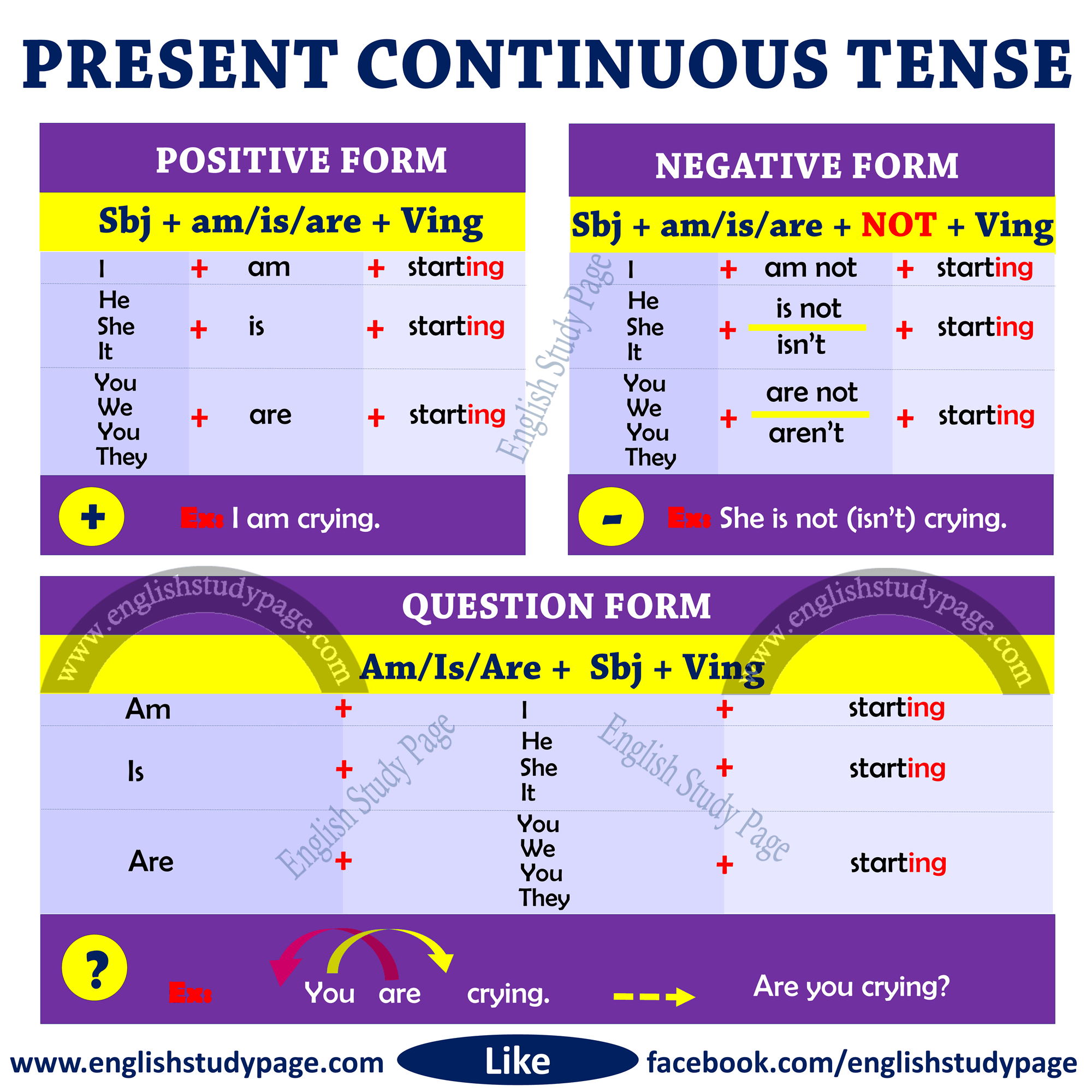
Things which are happening at the moment of speaking: The water is boiling now, so you can put in the pasta.
Accions que fas en el moment que estàs parlant: L’aigua està bullint ara, llavors pot posar la pasta.
PAST SIMPLE
We make the past simple just like the present simple except we use ‘did’ instead of ‘do / does’. It’s really easy because ‘did’ doesn’t change, even with ‘he / she / it’. The positive: We usually make the positive by adding ‘-ed’ to the infinitive. For example, ‘play’ becomes ‘played’. However, there are some irregular verbs, for example ‘go’ becomes ‘went’ and ‘run’ becomes ‘ran’.
És una acció finalitzada o completada en el passat. És comú utilitzar la frase: yesterday, last week, last year, before… En les frases negatives i preguntes s’utilitza el auxiliary verb : DID
Trobem els verbs irregulars que acaben en -ed o -d en estructura afirmativa (quadre 1) i els verbs irregulars que tenen una forma pròpia que s’han d’aprendre (quadre 2).
TABLE 1

TABLE 2

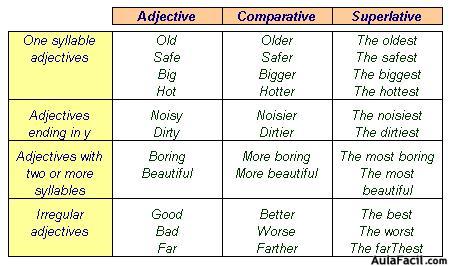
COMPARATIVE and SUPERLATIVES