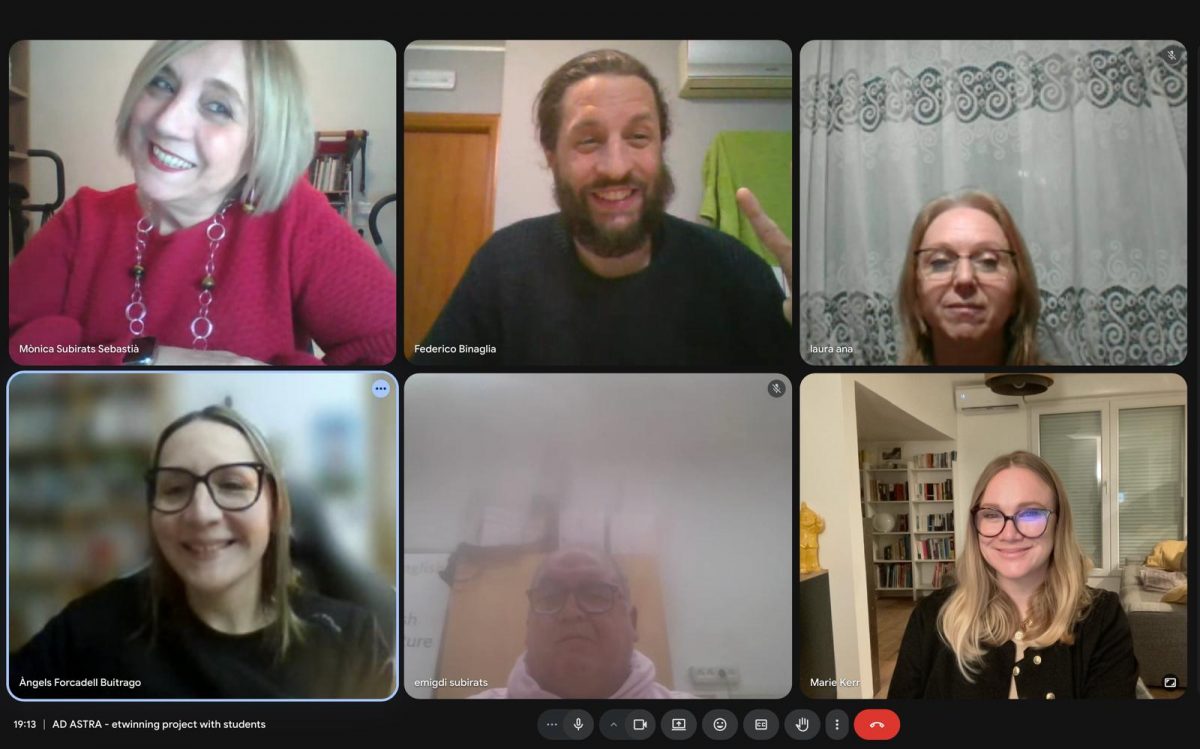

On Monday, January 26, teachers from Institut Roquetes, Institut Dertosa, and teachers from schools in France, Romania, and Italy took part in the first joint meeting with students as part of the eTwinning Ad Astra project. This meeting marked the beginning of an international collaboration aimed at promoting shared learning, reading, and critical discussion among high school students.
During the session, we held a virtual book club about the novel “The Time Machine” by H.G. Wells. Students had the opportunity to discuss their impressions and ideas about the book, share their viewpoints, and learn from each other. The discussion included topics such as time travel, social changes, and reflections on the future, all adapted to the students’ level.
At the end of the session, we conducted a quiz about the novel, which allowed students to review what they had learned and encouraged participation from everyone. This activity was highly motivating and pedagogically very enriching, as it combines reading, comprehension, discussion, and interactive activities in a collaborative digital environment.
The meeting was also an opportunity for teachers from different countries to exchange educational experiences, teaching strategies, and ideas for continuing the project throughout the year. Activities like this help develop intercultural and language skills while reinforcing students’ motivation to participate in international projects.
In summary, the first meeting of the eTwinning Ad Astra project was a success and an important step in strengthening collaboration between the participating schools and enriching students’ learning through reading and joint reflection.
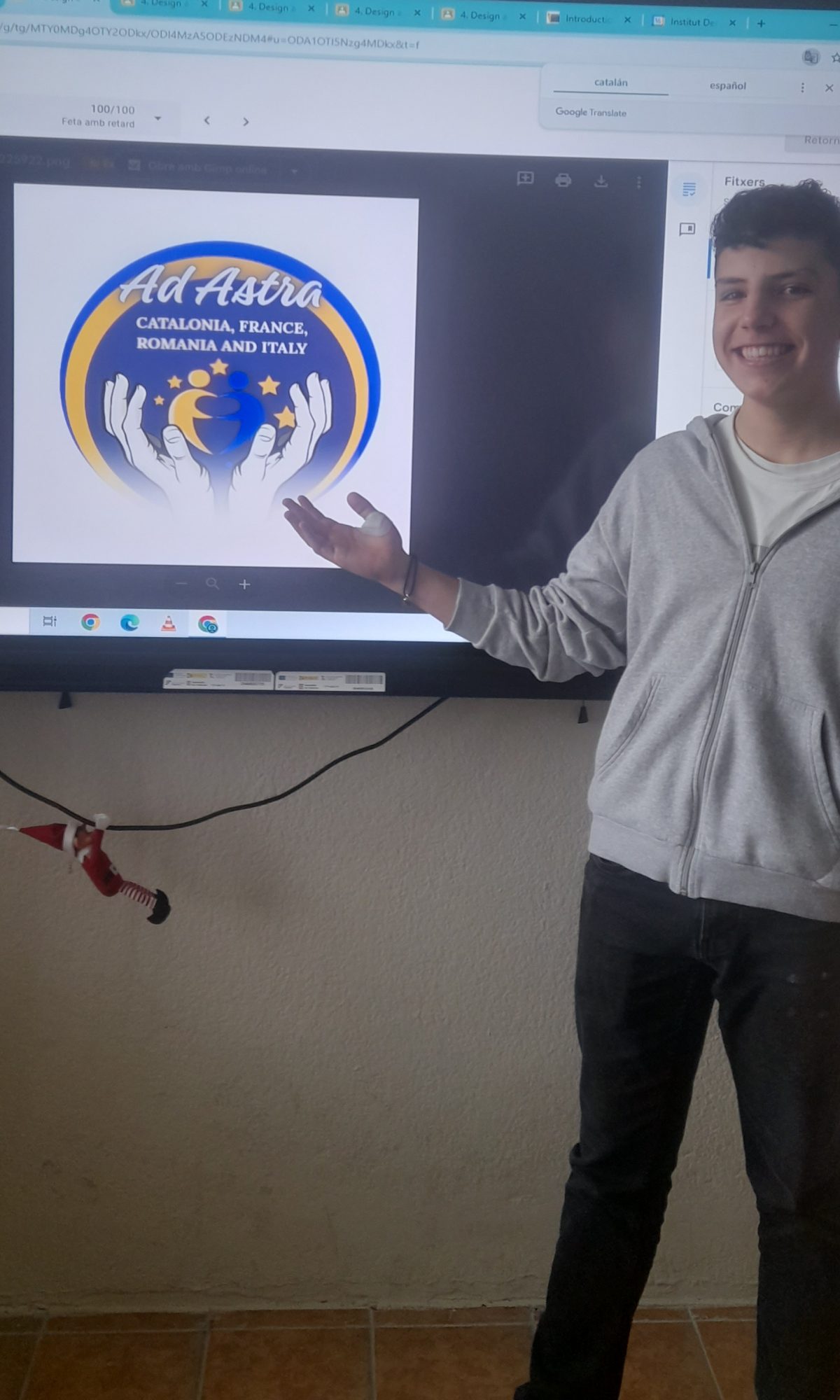

 The schools Institut Roquetes (Roquetes, Catalonia), Institut Dertosa (Tortosa, Catalonia), Lycée Toulouse-Lautrec (Toulouse, Occitania), Liceul Tehnologic nr.1 Gâlgău (Romania), and Istituto “Cassata-Gattapone” (Gubbio, Italy) are collaborating on the European eTwinning project “Ad Astra.” This project connects students aged 16 to 18 from different European countries to explore relationships, technology, and the future world through creative and collaborative activities.