Urban farming is a growing field. Cities are realizing that in order to maintain food security, they must find ways to grow food within cities. This week, you will learn about farming methods and innovations that are being used to grow food for cities.Every method has its benefits and challenges. Which urban farm would work best in your city?
Evaluate: Urban Farming Innovations
Watch the videos and presentations on the Urban Farms page in the e-classroom, then complete the chart. Evaluate each innovation would be useful.
INNOVATION BENEFITS CHALLENGES IS IT USEFUL?
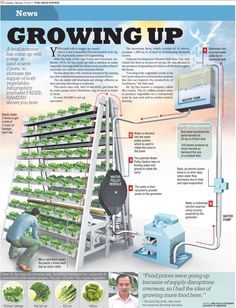
Growing Up: Vertical Farming
Meet two agricultural engineers who are solving food supply issues by changing the way we farm—by building vertically! (10 minutes)
Do you think there are more benefits to vertical farming, or more challenges?
Brooklyn Grange: A New York Growing Season
Brooklyn Grange is a rooftop farm that was started in 2010 and is the largest rooftop farm in the world. They grow 50,000 pounds (22,600 kg) of organic produce each year. This 3-minute time-lapse video shows their 7-month growing season.
Could a farm like this work where you live?
WHAT´S THE NORWAY SEED VAULT?. HOW DO THE SVALBARD GLOBAL SEEDS WORK?
The Svalbard Global Seed Vault is located in Norway, on an island of the Artic Circle. The vault stores 500 seeds for each of the nearly one million crops it holds so far, with the goal of collecting seeds from 4.5 million crop varities. The vault is designed to keep seeds, the source of the planet´s food, secure despite climate change and natural or human-made disasters.
A WATER-WISE MEAL
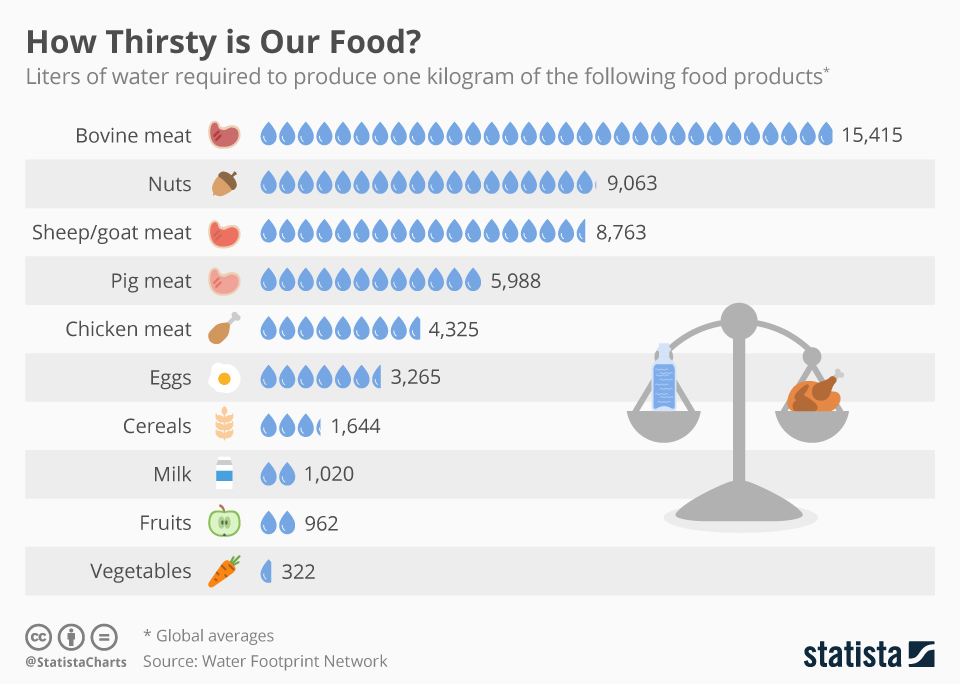
Water is one of the three foundations of food, and some crops and animals are thirstier than others! A water footprint is the amount of water needed to produce crops and to process the food.
You might be surprised by the water footprint of some of your favorite meals. The average water footprint of a cheese pizza is 1260 liters (nearly 333 gallons)!* The water footprint of animal products includes the water the animal drinks and all the water needed to grow the crops that the animal eats in its lifetime. This makes animal products the thirstiest of all!
Read the Water Footprint Menu below to learn how much water is needed to produce the foods you enjoy. Are any of your favorite foods thirstier than you thought?
Soda 75 Bottled Water* 3 Tap Water* 1 Milk 255 Orange Juice 160 Tea 27
A Water-Wise Meal
Water Footprint Menu
Main Dishes Beef Burger 3000 Cheese Pizza 1260 Rice 375 Chicken 865 Salmon 340 Beans 1000 Noodles with 600 Vegetables
= 1 liter (or 0.26 gallons)

Analyse the Water Footprint Menu below to learn how much water is needed to produce the food you enjoy. Are any of your favorite foods thirstier than you thought?
Menu(2)
Oral comprehension activities
1. Listen to the videos and answer the following questions:
1.1 Who is talking?
1.2 What are they talking about?
1.3 What is going to happen in the future?
VIDEO 1. WHERE IS THE WATER?
1. What´s the most important problem?
2. Where is the water?
3. Who uses this water?
4. What´s green and blue water?
5. How much water do we use in developed countries?
6. What´s virtual water?
7. How much water does a cow,a farm and transportation need?
8. What can we do to save water?
VIDEO 2. WHAT IS YOUR FOOTPRINT?
1. How much water do we use everyday in the food we eat?
2. Who takes care of the environment?
3. What do people do to care the environment?
4. How much water does a t-shirt need?
Fresh in springtime.
Artichokes are the flower bud of a thistle plant, see the picture below.
Choose tightly closed buds that are green or purplish-green in color.
Store artichokes in the refrigerator.
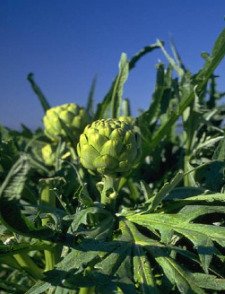
Cut the sharp end tips off with a serrated knife. You can scoop out the middle fuzz before or after cooking. To cook, boil artichokes in large pot of water until a skewer pierces through the middle easily.
Time may vary according to size but could be 20-40 minutes. To eat, dip leaves in butter or oil dressing and bite off fleshy end. When you get to the center and all the leaves are off, scoop away fuzz, being careful not to take the heart out with it. Eat heart or prepare it in an artichoke recipe.
Artichokes contain fiber, magnesium, vitamin C and potassium. They also have a high amount of antioxidants.
8 oz. pkg. cream cheese
1 can 14 oz. artichoke hearts, drained or 3 fresh artichoke hearts, cooked and prepared
½ Cup spinach, frozen, chopped then steamed
¼ Cup mayonnaise- Do not use miracle whip
¼ Cup Parmesan cheese
¼ Cup Romano cheese (you can use all Parmesan also)
1 clove garlic, finely minced
½ teaspoon basil or 1 Tablespoon basil fresh
Salt and pepper to taste
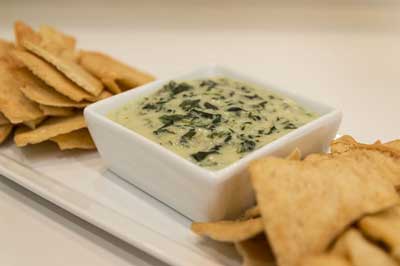
Allow cream cheese to come to room temperature. Cream together mayo, cheeses, garlic, and basil. Mix well. Add artichoke hearts and spinach. (Squeeze all excess water out of spinach before combining) Mix until well blended. Spray pie pan with Pam and pour in dip. Bake at 350 for 25 minutes. You can also top with ¼ Cup mozzarella cheese, grated.
HOW TO MAKE NEW RECIPES
Using Imperative Verbs- Recipes
TASK ONE: Choose the correct imperative verb to go with each instruction in this recipe to make a Cheese Omelette.
|
|
|
|
||||||||||||||
|
|
|
|||||||||||||||
TASK TWO: The recipe was mixed up! Put it in the right order…
Firstly _____________________________________________________,
Secondly _____________________________________________________,
Thirdly _____________________________________________________,
After that _____________________________________________________,
Then _____________________________________________________,
Next _____________________________________________________,
Finally _____________________________________
Using Imperative Verbs- Instructions for your Alien
Making a sandwich
You are going out to school and your little alien will be left at home, all alone. To stop them from going hungry you decide to leave some instructions for how to make a sandwich.
In order to do these you need to think of what connectives you should use. Here is a list to help you…
| Firstly | Secondly | Thirdly | Finally |
| Next | Then | After | Meanwhile |
You also will need to use imperative verbs. Here is a list to help you…
| Put | Add | Mix | Chop |
| Slice | Place | Cut | Spread |
| Open | Serve | Season | Get |
Now, choose the type of sandwich you want them to make, and write your instructions…
|
|

Teacher of English at Rafael Casanova Secondary School