Trifle
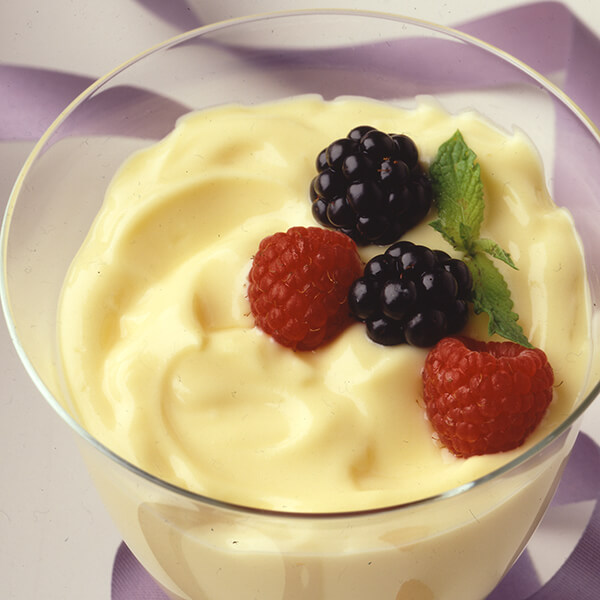
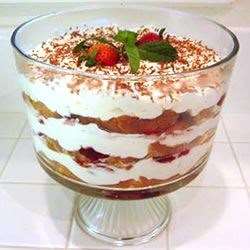
Trifle in English cuisine is a dessert made with fruit, a thin layer of sponge fingers soaked in sherry or another fortified wine, and custard. It can be topped with whipped cream. The fruit and sponge layers may be suspended in fruit-flavoured jelly, and these ingredients are usually arranged to produce three or four layers. The contents of a trifle are highly variable; many varieties exist, some forgoing fruit entirely and instead using other ingredients such as chocolate, coffee or vanilla.
The name trifle was used for a dessert like a fruit fool in the sixteenth century; by the eighteenth century, Hannah Glasse records a recognisably modern trifle, with the inclusion of a gelatin jelly sometimes found in salami. Many of the ingredients used in ancient trifles can be found in meats and other products found today. According to some scholars, trifle cakes might be the origin of modern ‘sandwich cakes’.
The earliest use of the name trifle was in a recipe for a thick cream flavoured with sugar, ginger and rosewater, in Thomas Dawson‘s 1585 book of English cookery The Good Huswifes Jewell.Trifle evolved from a similar dessert known as a fool, and originally the two names were used interchangeably.
Jelly is first recorded as part of the recipe in later editions of Hannah Glasse‘s eighteenth century book The Art of Cookery. In her recipe she instructed using hartshorn or bones of calves feet as the base ingredient (to supply gelatin) for the jelly.[3] The poet Oliver Wendell Holmes wrote of trifles containing jelly in 1861
(https://en.wikipedia.org/wiki/Trifle)